A AM Air Conditioning Repair
Lawrence, MS · 39336 Not Cooling · Warm Air · Leaks · Replacement

AC Recharge in Lawrence, MS Near Me

Low on refrigerant? A proper recharge starts with finding out why. A local tech checks the charge with gauges first.

Home AC Repair Calls
Local AC Companies
Symptoms Talked Through
Repair or Replace Advice

Air conditioners don't use up refrigerant the way a car burns gas. It runs in a sealed loop, so if your system is low, it has a leak somewhere. That's the honest starting point for any AC recharge in Lawrence, MS. We connect you with a local AC tech who will check the charge properly and tell you what it means for your system.

Signs your AC may be low on refrigerant

  • Air from the vents is cool but not cold
  • Ice on the copper suction line at the outdoor unit or on the indoor coil
  • The system runs nonstop on mild days and still can't reach the set temperature
  • A hissing or bubbling sound near the coil or line set

Those same symptoms can come from a dirty filter, a failing blower or a fouled coil, which is why a tech should measure before adding anything. If the house just isn't getting cool, our AC not cooling page goes through the full list of causes.

How the tech checks the charge

The tech connects gauges to the service ports and reads suction and liquid pressures, then calculates superheat (for systems with a fixed metering device) or subcooling (for systems with a TXV). Those numbers, compared against outdoor temperature and the manufacturer's chart, tell whether the system is actually undercharged. Topping off a system that's already full damages the compressor, so this step matters.

Recharge, or find the leak first

If the charge is low, there are two options. One is to add refrigerant and see how long it holds, which can make sense for a very slow leak on an older system. The better option, especially if you've needed refrigerant before, is leak detection and repair. Our refrigerant leak repair page explains how techs find leaks with electronic detectors, bubble solution and dye. A system that keeps losing charge also runs its compressor hot, and an unrepaired leak is a common road to compressor failure.

R-22 versus R-410A and newer refrigerants

Systems installed before about 2010 often use R-22, which is no longer produced in the U.S. Remaining supply is reclaimed and scarce, so recharging an R-22 unit gets expensive fast. Newer systems use R-410A, and the newest equipment uses lower-impact refrigerants like R-454B. Your tech can read the data plate on the condenser and tell you which one you have.

What drives the cost

The refrigerant type, how many pounds are needed, whether leak detection is included, and the service call itself. Recharges for R-22 systems cost far more per pound than newer refrigerants. If you're facing repeated recharges on an old unit, it's worth asking about replacement.

Call (337) 568-0294 and we will connect you with a local AC tech in Lawrence, MS who can check your system's charge.
How booking works

Four steps to getting your AC looked at in Lawrence, MS

01

Tell us what it's doing

Humming outside, warm air from the vents, ice on the line, water on the floor. The details help the tech come prepared.

02

We connect you

We line you up with a local AC company covering Lawrence, MS and you set the visit time directly with them.

03

The tech diagnoses it

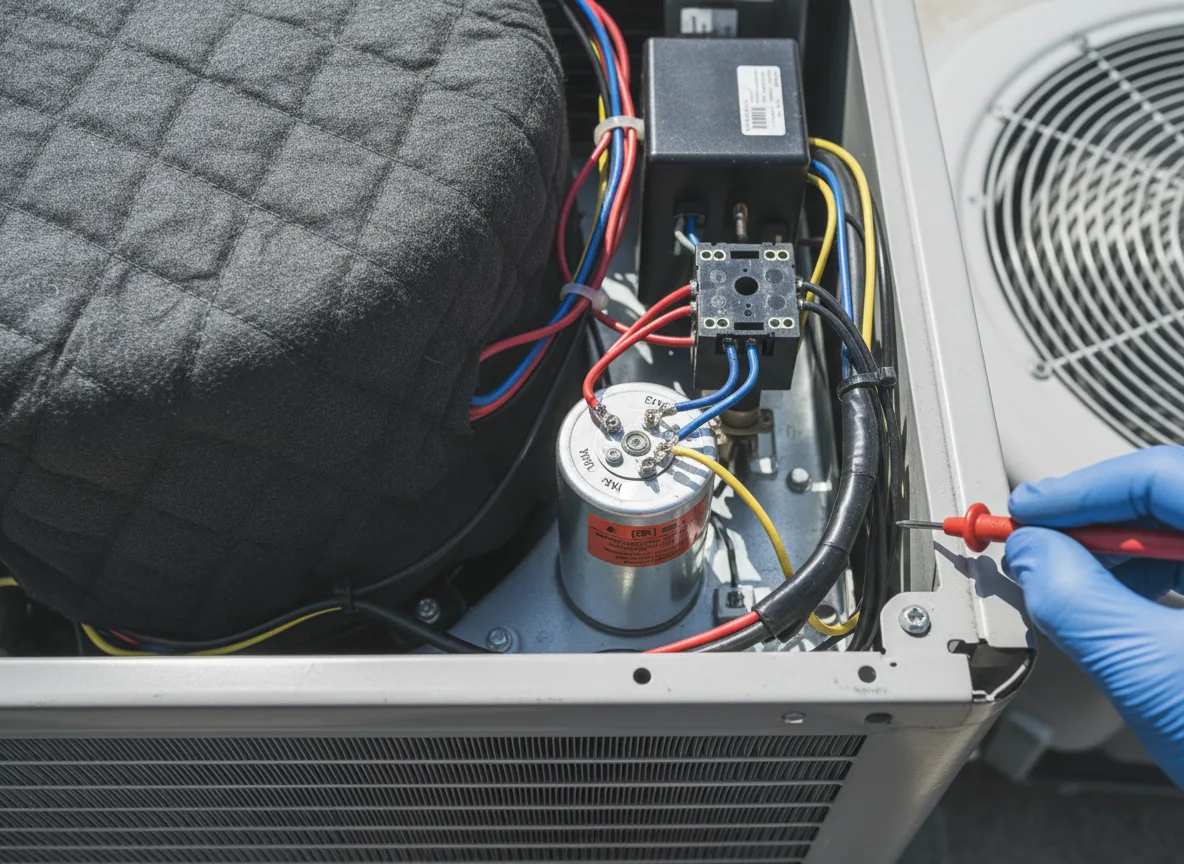
Meter on the capacitor and contactor, gauges on the service ports, a look at the filter, coil and drain.

04

You decide on the fix

The tech explains what failed and the options. Repair, replace or think it over, the call is yours.

Coverage

AC Repair Across Lawrence, MS

Central air service calls across the neighborhoods and ZIP codes around Lawrence, MS.

ZIP codes we serve

39336
AC Recharge in Lawrence, MS

AC repair FAQs

Frequently asked questions about AC repair

Questions we hear most about AC Recharge in Lawrence, MS.

Ask about your AC
Why is my outdoor AC unit humming but the fan is not spinning?
<p>That is the classic sign of a failed run capacitor. The capacitor gives the fan motor and compressor the electrical kick they need to start. When it weakens, the motor hums and stalls. Sometimes the fan motor itself has seized bearings. Turn the system off at the thermostat so the compressor doesn't overheat, and have a tech test the <a href="/services/ac-capacitor-replacement">capacitor</a> before anyone replaces a motor. Don't poke the fan blade with a stick to get it going.</p>
Why is my AC leaking water inside the house?
<p>Almost always a clogged condensate drain. Your AC pulls water out of the air, often several gallons a day in humid weather, and sends it through a small PVC drain line. Algae and sludge build up in that line until water backs up and overflows the pan. A failed condensate pump, a rusted pan or a frozen coil melting off can also do it. A tech can clear the line with a wet vacuum or nitrogen and check the float switch. More on our <a href="/services/ac-leaking-water">AC leaking water page</a>.</p>
How long does a typical AC repair take?
<p>Most common repairs, such as a capacitor, contactor or drain clearing, take about an hour once the tech is on site and has the part. A condenser fan motor may take a little longer. Leak searches can take a few hours because the tech is tracing refrigerant along coils and joints. Compressor and coil replacements usually run most of a day because of refrigerant recovery, brazing, a vacuum and recharge. Parts that need to be ordered add days.</p>
What should I check before calling for AC repair?
<p>Five minutes of checks can save a visit. Confirm the thermostat is on Cool, set below room temperature, with working batteries. Check both breakers, the one for the indoor unit and the 240-volt one for the outdoor unit. Make sure the disconnect box by the outdoor unit is in place. Replace a dirty filter. Look for water in the drain pan, since a tripped float switch shuts the system off. If a breaker trips again after reset, leave it off and call.</p>
How often should a central AC get a tune-up?
<p>Once a year, ideally in spring before the first heat wave. In hot climates where the AC runs most of the year, some homeowners book twice. A real tune-up includes rinsing the condenser coil, testing the capacitor, checking the contactor, reading refrigerant pressures, measuring temperature drop and flushing the drain. Change your filter every one to three months in between. Catching a weak contactor or capacitor in April beats losing cooling in July.</p>

Book AC repair

AC Acting Up in Lawrence, MS? Call now.

Tell us what your system is doing and we connect you with a local AC company covering Lawrence, MS. The tech diagnoses it and explains the options. (337) 568-0294.

Call (337) 568-0294 Services